
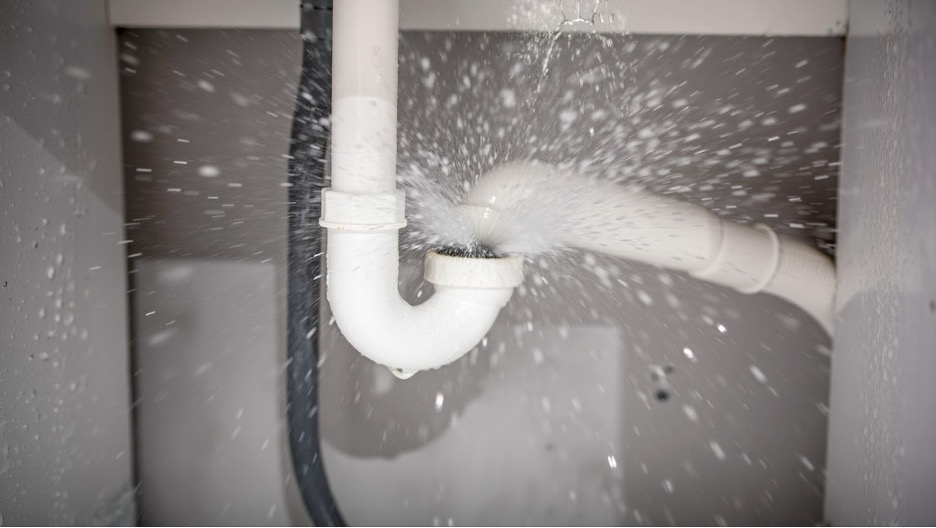
Not every plumbing problem announces itself with a dramatic flood or a geyser in the front yard. Some of the most damaging leaks are the ones you never see.
By the time a hidden leak makes itself obvious, it may have already caused thousands of dollars in water damage, invited mold into your walls, or rotted out structural framing you didn't know was getting wet.
Luckily, hidden leaks almost always leave clues. You just have to know what to look for. Here are ten signs that your home might be hiding a water leak, and what to do if you spot them.
1. Your Water Bill Crept Up for No Obvious Reason
This is often the first sign homeowners notice, and it's the one that's easiest to brush off. You figure maybe you watered the lawn more this month, or the kids took longer showers, or rates went up.
But if your water usage has climbed steadily over the past few billing cycles and nothing about your routine has changed, something is using water that shouldn't be. Even a small leak, from a toilet flapper that doesn't seal or a pinhole in a supply line behind a wall, can waste hundreds of gallons a month.
What to do: Pull out your last three to six water bills and compare them. If usage is trending upward without explanation, it's worth investigating. You can also check your water meter. Turn off every water-using fixture and appliance in the house, then check the meter. If it's still moving, water is going somewhere it shouldn't.
2. You Hear Water Running When Nothing Is On
The house is quiet. No one's in the shower. The dishwasher isn't running. The washing machine is off. But you can hear the faint sound of water moving through pipes, or a soft hissing behind a wall.
This is the kind of thing that's easy to second-guess. You hear it once, convince yourself it was nothing, and move on. Then you hear it again a few days later. Trust your ears on this one. Water moving through your plumbing when no fixtures are in use means water is going somewhere, and that somewhere is likely a leak.
What to do: Walk through the house when things are quiet (late at night works well) and listen near walls, ceilings, and floors, especially in bathrooms, the kitchen, and the laundry room. If you can consistently hear water movement with everything turned off, call a plumber.
3. There's a Musty Smell You Can't Get Rid Of
You've cleaned the bathroom. You've taken out the trash. You've checked the fridge for forgotten leftovers. But there's a persistent, damp, musty, earthy smell that won't go away, almost like a wet basement, even if you don't have one.
That smell is usually mold or mildew, and mold needs moisture to grow. If there's no obvious source of dampness (no spills, no condensation, no leaky faucet you can see), the moisture is likely coming from inside a wall, under a floor, or above a ceiling where a pipe is slowly dripping.
What to do: Follow your nose. Try to narrow down which room or area of the house the smell is strongest in. Check under sinks, around toilets, and behind appliances like the washing machine and dishwasher. If you can't find a visible source, the leak may be hidden in a wall or slab, and you'll want a professional to take a look.
4. You've Got Stains on Walls or Ceilings That Weren't There Before
Mysterious discoloration on drywall is one of the more visible clues that water is getting into places it shouldn't. These stains often show up as yellowish or brownish rings or blotches, and they may grow slowly over time. On ceilings, they tend to form roughly circular shapes. On walls, water often follows the path of gravity, creating streaks or stains that run vertically.
Sometimes the drywall feels soft or spongy to the touch. In more advanced cases, paint may start bubbling, peeling, or flaking off. All of these point to moisture behind the surface.
What to do: Don't just paint over it. A stain on drywall means water has been sitting there long enough to soak through, which means the leak has been active for a while. Mark the edges of the stain with a pencil and check it again in a few days. If it's growing, the leak is active and needs attention now.
5. Your Floors Are Warping, Buckling, or Feel Soft
Hardwood floors that start to cup or buckle. Laminate that's lifting at the seams. Tile that's come loose. Vinyl that feels spongy underfoot. Carpet that's damp in one spot for no apparent reason.
Flooring changes are a big red flag because by the time the floor is visibly affected, water has usually been sitting underneath it for a while. This is especially common with slab leaks, leaks in the water lines that run through or under your home's concrete foundation. In Austin, where many homes are built on slabs, this is a problem we see regularly.
What to do: Pay attention to any area of flooring that looks or feels different from how it used to. If you notice a warm spot on a tile or concrete floor, that could indicate a hot water line leak under the slab. Don't ignore it! Water under the flooring can cause structural damage and create a perfect environment for mold.
6. There's Mold Where Mold Shouldn't Be
A little mold in the shower grout is normal (if annoying). Mold growing on a bedroom wall, in a closet, along a baseboard, or on a ceiling in a room that isn't particularly humid? That's a problem.
Mold needs consistent moisture to colonize a surface. If it's showing up in places that don't have an obvious reason to be wet, there's a hidden water source feeding it. The mold you can see is often just the tip of the iceberg. There may be much more growing behind the drywall where the actual moisture is.
What to do: Don't just clean the mold and call it done. If it comes back (and it will if the moisture source is still active), you need to find and fix the leak. Mold remediation without leak repair is like mopping the floor while the faucet's still running.
7. Your Water Pressure Dropped
If the shower that used to blast you awake now feels like a gentle suggestion, or the kitchen faucet takes noticeably longer to fill a pot, something may have changed in your plumbing system.
A sudden drop in water pressure can mean a few things, but one of the most common is a leak in a supply line. Water that's supposed to reach your faucet is escaping somewhere along the way, reducing the pressure at the fixture. The bigger the leak, the more noticeable the pressure drop.
What to do: First, check whether the pressure drop affects the whole house or just one fixture. If it's one fixture, the issue may be localized. A clogged aerator, a failing valve, or a supply line issue near that fixture. If it's house-wide, the problem is likely in a main supply line, and it's worth having a plumber investigate.
8. Your Foundation Has New Cracks
Austin's clay soil already puts foundations through a lot: it expands when it's wet, shrinks when it's dry, and shifts with the seasons. So a small crack in a slab foundation isn't necessarily a five-alarm situation.
But new cracks that appear suddenly, existing cracks that are getting wider, or cracks accompanied by other signs on this list (high water bills, damp floors, warm spots on the slab) could point to a water leak beneath or around the foundation. A persistent leak can erode the soil supporting your slab, causing it to settle unevenly and crack.
What to do: Document any new cracks with photos and measurements. If they're accompanied by other leak symptoms (especially unexplained water usage or soft/warm spots on the floor) get a plumber out for leak detection. Catching a slab leak early can save you from much more expensive foundation work down the road.
9. Your Yard Has a Wet Spot That Never Dries Out
If one area of your lawn is always soggy, unusually green compared to the rest, or growing noticeably faster, there may be a leaking water or sewer line underground.
This is especially telling during dry stretches when the rest of the yard is stressed. That one lush, green patch might look like you've got great soil in that spot, but what you've really got is a steady supply of water from a cracked pipe feeding the grass from below.
Sewer line leaks can also cause soft, sunken areas in the yard as the leaking water erodes the soil. If you notice an area that seems to be sinking or feels spongy, there may be a problem with an underground pipe.
What to do: Note the location relative to where your main water line enters the house and where your sewer line runs toward the street. If the wet area is along either of these paths, that's a strong clue. A plumber can use camera inspection and line locating equipment to confirm whether a pipe is leaking and pinpoint its location without digging up the whole yard.
10. Your Hot Water Heater Is Running More Than Usual
If your water heater seems to be cycling on more frequently than it used to (you hear it firing up at odd times or more often throughout the day), it may be working overtime to replace hot water that's leaking out of a pipe before it reaches a fixture.
A hot water line leak is particularly sneaky because the water often evaporates or gets absorbed before it creates a visible puddle. But the water heater knows. It keeps heating water to maintain the tank temperature, burning gas or electricity in the process. Your energy bill may go up alongside your water bill, and both increases might be gradual enough to go unnoticed individually.
What to do: If your water heater seems more active than usual and your utility bills are creeping up, check for warm or damp spots along walls and floors near hot water lines, especially in the kitchen, bathrooms, and laundry room. A plumber can use leak-detection equipment to trace hot-water lines and identify the source.
What to Do If You Suspect a Hidden Leak
If any of these signs sound familiar, it's time to call a plumber. Hidden leaks don't fix themselves, and they don't get cheaper to repair the longer they run.
At Clarke Kent Plumbing, we've been tracking down hidden leaks in Austin homes since 1986. We use camera inspections, electronic leak detection, and line locating equipment to find the source of the problem without tearing your house apart. Once we know where the leak is and what's causing it, we'll explain your options and help you make the best decision for your home.
If you're dealing with a plumbing emergency, call us at 512-477-2200. We answer live 24/7.
For non-emergency concerns, you can also reach us at dispatch@clarkekentplumbing.com (monitored Monday through Friday, 7:30 AM–5:00 PM) or stop by our office at 1408 W. Ben White Blvd., Austin, TX 78704.
The sooner you catch a hidden leak, the less damage it does. Trust your instincts. If something seems off, it probably is.
How Can We Help?
For any inquiries or questions, please call us at 512-477-2200 or email us at dispatch@clarkekentplumbing.com



1408 W. Ben White Blvd.
Austin TX 78704
Phone: 512-477-2200
Fax: 512-916-8856
dispatch@clarkekentplumbing.com
This email is monitored Mon-Fri 7:30am-5:00pm





#14195
© 2026 Clarke Kent Plumbing, Inc.