
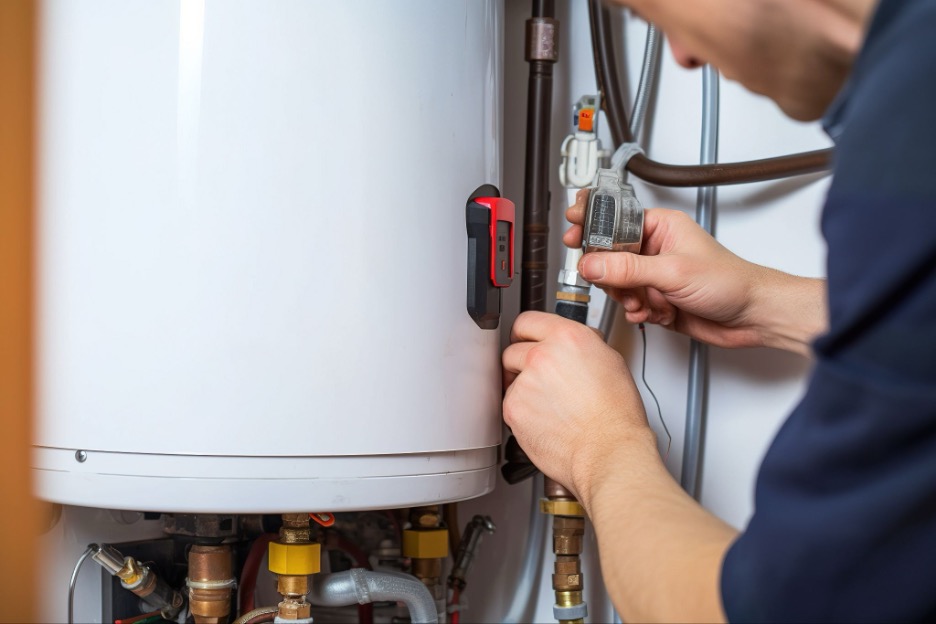
A failed water heater announces itself fast, and it always seems to happen at the worst time. The good news is that not every water heater failure means an immediate replacement. Some causes are simple enough to check yourself in under five minutes. Others need a licensed plumber, and a few require emergency service.
Our guide walks you through how to tell the difference, what to check first, and when to call for help.
If you're in Austin and need someone out today, Clarke Kent Plumbing runs a 24/7 emergency service. Call 512-477-2200, and a plumber will be on the way.
What Are the First Signs Your Water Heater Is Failing?
Before jumping into troubleshooting, know what you're looking for. Water heaters rarely fail without warning. Common symptoms include:
- No hot water at all, even after waiting 30+ minutes
- Lukewarm water that never reaches a comfortable temperature
- Inconsistent temperature, swinging between hot and cold mid-shower
- Discolored or rusty water coming from hot taps only
- A rotten egg or sulfur smell from hot water
- Rumbling, popping, or crackling sounds from the tank
- Water pooling around the base of the unit
- A pilot light that won't stay lit (gas heaters)
Each of these points to a different underlying cause. Here's how to work through them.
Is It a Gas or Electric Water Heater? Start Here.
Your first troubleshooting steps depend entirely on what type of water heater you have.
If You Have a Gas Water Heater
Check the pilot light first. If the pilot light is out, that's often the entire problem. To relight it:
- Set the gas valve to Pilot
- Hold the pilot button down while pressing the igniter button until the flame appears
- Continue holding the pilot button for at least 15 seconds to let the thermocouple heat up
- Release and set the valve back to On
If the pilot won't light or keeps going out within a few minutes, the thermocouple is likely dirty or failing and needs replacement. That's a job for a plumber.
Check the gas supply. Make sure the gas valve on the supply line running to the water heater is fully open. A partially closed valve restricts flow and can prevent the burner from firing properly.
Never attempt to troubleshoot a gas leak yourself. If you smell gas near your water heater, don't touch anything. Leave the area, leave the house, and call your gas utility from outside.
If You Have an Electric Water Heater
Check the circuit breaker first. Electric water heaters run on 240 volts and have a dedicated breaker. A tripped breaker is one of the most common causes of a complete loss of hot water. Find the breaker labeled for your water heater, flip it fully off, then back on.
Press the reset button. Electric water heaters have a red reset button on the upper thermostat, behind the access panel. If the unit overheated, it may have tripped the high-limit switch. Remove the panel cover, push the reset button firmly, replace the cover, and wait 30-60 minutes before testing.
Check for a failed heating element. If the breaker is fine and the reset didn't help, you likely have a failed heating element. Testing one requires a multimeter. If you're not comfortable with that, call a plumber rather than guessing.
If You Have a Tankless Water Heater
Read the error code on the display panel. Tankless units display specific fault codes when something goes wrong. Pull up your owner's manual and look up the code. Many are simple fixes, like a flow sensor needing a reset. If the code points to a gas, venting, or electrical issue, call a professional.
What Are the Most Common Water Heater Problems?
Sediment Buildup in the Tank
Over time, minerals from your water supply settle at the bottom of the tank. In Austin, where water hardness runs higher than average, this builds up faster than in softer-water markets. Sediment creates a layer between the burner or heating element and the water, forcing the unit to work harder and heat less efficiently.
Signs: Popping, rumbling, or crackling sounds during heating cycles. Slower recovery time between uses. Higher energy bills.
What to do: Flush the tank. Attach a garden hose to the drain valve at the bottom of the tank, run it to a floor drain or outside, shut off the cold water supply, open the drain valve, and let it run until the water clears. For tanks that haven't been flushed in years, this is often better handled by a plumber who can assess whether the sediment has already caused damage.
Prevention: Flush your tank every six months. If you have a water softener, make sure it's working correctly, as it works in direct relation to your water heater's health.
Thermostat Set Too Low or Malfunctioning
This is a quick check before assuming something serious is wrong. The recommended setting for a residential water heater is 120°F. Lower than that and water won't feel hot enough. Much higher and you risk scalding.
What to do: Locate the thermostat dial (usually behind the same access panel as the reset button on electric units, or on the gas valve on gas units). Set it to 120°F and wait an hour before retesting. If adjusting the thermostat doesn't change anything, the thermostat itself may be faulty.
A Leaking Tank or Connections
A leak near the water heater can come from several places, and the source matters.
- Inlet/outlet connections at the top of the tank are often just loose fittings. A plumber can tighten or replace them.
- The pressure relief (TPR) valve on the side of the tank may be releasing pressure due to excessive heat or internal pressure. A dripping TPR valve means something else is wrong inside the unit.
- The tank itself is the worst-case scenario. A cracked or corroded tank cannot be repaired. It needs to be replaced.
What to do: If water is pooling at the base of the unit and you can't trace it to a fitting or valve, assume the tank. Turn off the cold-water supply to the heater, shut off the power or gas supply, and call a plumber.
Discolored or Smelly Water
Rusty or brown water from hot taps only usually points to a corroded tank or a deteriorating anode rod. The anode rod is a sacrificial metal rod inside the tank designed to attract corrosion before it reaches the tank walls. When it's fully consumed, the tank starts corroding instead.
Rotten egg smell is caused by sulfur-reducing bacteria growing inside the tank. It's more common in tanks set below 120°F and in homes with well water. Flushing the tank and temporarily raising the temperature to 140°F can kill the bacteria, but it needs to be returned to 120°F afterward to prevent scalding.
What to do: Both issues benefit from professional diagnosis before assuming the tank is done. An anode rod replacement is far cheaper than a full water heater replacement.
The Pilot Light Keeps Going Out
If you've relit the pilot and it goes out again within minutes, the thermocouple is the most likely culprit. The thermocouple is a safety device that senses the pilot flame and keeps the gas valve open. When it fails or gets dirty, it shuts off gas flow even when the flame is present.
What to do: A thermocouple replacement is a repair, not a replacement. A plumber can handle it quickly, and it's significantly cheaper than a new unit.
Should You Repair or Replace Your Water Heater?
This is the question most homeowners face after a service call. Here's how to think through it:
Repair makes sense when:
- The unit is under 8 years old
- The repair addresses a single, specific component (thermocouple, heating element, anode rod, thermostat)
- The repair cost is less than 50% of what a new unit would cost
- The tank itself is in good condition with no rust or corrosion
Replacement makes sense when:
- The unit is 10 years or older (most water heaters have a useful lifespan of 8-12 years, with problems becoming more frequent after year six)
- The tank is leaking from the body or bottom
- You've had multiple repairs in the past two years
- Energy bills have climbed without explanation
- Rust or discolored water persists after anode rod replacement
A plumber can assess the condition of your unit and give you an honest recommendation. At Clarke Kent Plumbing, we'll tell you what we'd do if it were our own home.
When Does a Water Heater Problem Become an Emergency?
Some situations can't wait for a scheduled appointment. Call for emergency service immediately if:
- You smell gas near the water heater
- Water is actively flooding from the unit
- The TPR valve is releasing water continuously, indicating dangerous pressure buildup inside the tank
- You have no hot water and a household member depends on it for medical reasons
Clarke Kent Plumbing runs 24-hour, 7-days-a-week emergency service in Austin. If any of the above applies, don't wait. Call 512-477-2200 now.
How Do You Prevent Water Heater Problems?
Most water heater failures don't happen overnight. They build up from years of skipped maintenance. A straightforward annual routine keeps most problems from developing:
- Flush the tank every six months to clear sediment before it compacts
- Inspect and replace the anode rod every 3-5 years (sooner in hard water areas like Austin)
- Test the TPR valve annually by lifting the lever briefly to confirm it opens and reseals
- Set the thermostat to 120°F and leave it there
- After any power outage, turn off the water heater before power is restored to protect against surge damage. Turn it back on manually once power stabilizes.
- Have a plumber inspect the unit annually, especially once it's past the five-year mark
Clarke Kent Plumbing Handles Water Heaters in Austin
Clarke Kent Plumbing has been serving Austin homeowners and businesses with residential and commercial plumbing for years. Water heater repair and replacement is one of the most common calls we get, and we carry parts for most major brands so we're not leaving you without hot water while waiting on a supplier.
Whether you need a quick diagnosis, a same-day repair, or a full replacement with a tankless upgrade, we'll give you straight answers and a fair price.
Call us at 512-477-2200 or contact us online to schedule service. Emergency calls are answered 24 hours a day, 7 days a week.
How Can We Help?
For any inquiries or questions, please call us at 512-477-2200 or email us at dispatch@clarkekentplumbing.com



1408 W. Ben White Blvd.
Austin TX 78704
Phone: 512-477-2200
Fax: 512-916-8856
dispatch@clarkekentplumbing.com
This email is monitored Mon-Fri 7:30am-5:00pm





#14195
© 2026 Clarke Kent Plumbing, Inc.